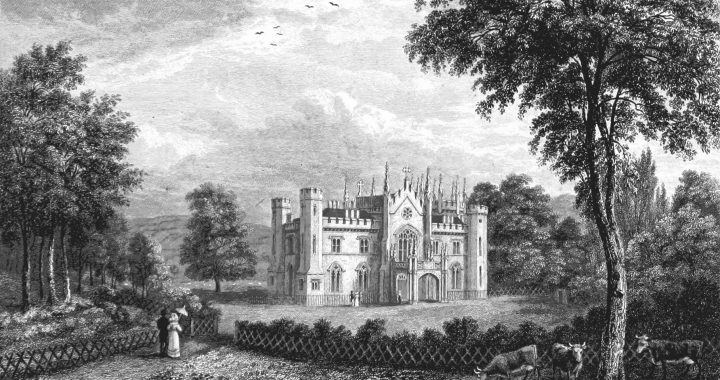
I have received a considerable number of enquiries relating to the genealogy of the Somervilles of Cambusnethan. I had intended to include an entry for them in the first series but got sidetracked before it could be completed in time for publication in the latest edition. Below constitutes the draft entry as it currently stands which, once completed, will be included within Volume 1 of the Second Series. I thought it may be worthwhile posting to here in its current form if only to counter some of the many errors in other accounts I have viewed elsewhere. A point of curiosity is that while reading through various documents relating to the family it quickly became apparent that their castle was a sizeable structure, however, all traces appear to have been obliterated at the building of the later mansion house. Should anyone have information on that original fortification, I would be keen to hear from them.
SOMERVILLE of CAMBUSNETHAN
Sir John Somerville, 1st of Cambusnethan, was provided by his father, John, Lord Somerville, “pro filiali dilectione,” to the barony of Cambusnethan by charter dated 13 December 1485, in which he is styled the second son, and which was confirmed by charter expede under the Great Seal on 20 July 1488.[1] He married at Edinburgh, on 3 July 1489, to Elizabeth, daughter of John Carmichael, 1st of Balmedie, (who survived him and is named on 15 April 1516, in relation to her terce of the lands of Drum and a third of Gilmerton[2]), and was killed at the battle of Flodden in September 1513.[3] He was father of,
- John Somerville of Cambusnethan, (see below).
- William Somerville, received the gift of the the moveable and unmoveable goods belonging to William Somerville in the Nuke on 4 July 1527, and is then styled brother to John Somerville of Cambusnethan.[4]
- Alexander Somerville, is styled father’s brother to John Somerville of Cambusnethan when cautioner for John Hamilton of Drumry in an Obligation dated 19 June 1574.[5]
- Margaret Somerville, married by 20 November 1508, to John Nesbit of Dalzell, when they had a conjunct charter under the Great for his half part of the lands of Dalzell,[6] and gave consent to the disponing of his estate to his kinsman, George Nesbit, on 16 August 1513.[7]
- Agnes Somerville, married firstly, as a third wife, to John 2nd Lord Fleming, and whose relict she was on 17 December 1528, when she was provided to a liferent of the Wester Carscour by his eldest son by a former marriage, Malcolm, 3rd Lord Fleming.[8] She married secondly, by 29 January 1529/30, to George Leslie, 4th Earl of Rothes, when on his resignation, they had a conjunct charter under the Great Seal for the lands of Carny.[9]
- Helen Somerville, married as a first wife, Robert, 4th Lord Boyd, and had a conjunct charter with him for the lands of Dundonald on 20 May 1536.[10]
John Somerville, 2nd of Cambusnethan, succeeded his father and was infeft in the lands of Cambusnethan upon precept dated 12 May 1514.[11] He received a respite under the Privy Seal on 4 July 1535, “to endure fra the day of ye dait tharof quhill the said Johnnis departing furth of the realme, returnying agane within the samin and xl dais tharefter.”[12] He married, firstly, to Margaret, daughter of William Graham, 1st Earl of Montrose, (marriage contract 10 July 1510), and secondly, by 12 March 1511/12, to Janet, daughter of Adam Hepburn of Craigs, when, in consideration of the terms of their marriage contract, they were provided by his father to the lands of Gilmerton and Gutteris, in the sheriffdom of Edinburgh.[13] He married thirdly, to Catherine, daughter of Robert Dalzell of that Ilk, (she survived him and had married secondly, by 16 December 1543, to John Lindsay of Covington.[14] She also survived him and married thirdly, by 27 February 1562, to Mr. John Crichton of Ryhill[15]), and died before 4 April 1538. He had issue,
- John Somerville of Cambusnethan, (see below).
- William Somerville, had the gift of the eascheat of James Somerville in Humby and James Johnston in Westraw on 24 April 1566,[16] and was a witness to a charter by David Nesbit of Dalzell on 15 June 1574, and is then styled brother german to John Somerville of Cambusnethan.[17] He was in Warriston by 20 November 1579, when he and his brother, James, entered into a contract with James Dalzel, merchant burgess of Edinburgh.[18]
- James Somerville, was a son by Christian Dalzell and is so styled in an agreement between his curators relating to provisions due to him on 16 December 1543.[19]
John Somerville, 3rd of Cambusnethan, was under age at his father’s death and had his marriage gifted by the James V. to Katherine Carmichael, daughter of John Carmichael of Meadowflat, on 4 April 1538.[20] He was infeft in the lands of Prestwickschaws, in Ayrshire, as heir to his late grandfather, John Somerville of Cambusnethan, who had been killed at the battle of Flodden, (obiit in bello de Flowdoun), upon precept dated 27 March 1561.[21] He was one of those accused of the murder of the Queen favourite, David Riccio, for which he was included in a charge for that crime on 19 March 1565/66.[22] He appeared before the Lords of Secret Council in Edinurgh on 24 May of that year “to answer to sic thingis as sould be laid to his charge”[23] and was one of the cationers for Hugh, Lord Somerville on 29 January 1573/74.[24] He became bound on 22 November 1578, to “entir and present his men, tennentis, and servandis, dwelland upoun his landis and heretage, befoir the Justice or his deputis as he salbe requirit thairto, ilkane of thame under the pane of thre hundreth merkis,”[25] but in his old age he was at odds with his eldest son, James, and his grandson John, against whom he complained to the Privy Council on 17 July 1588, that “James, his eldest son, and Johnne, his oy, having shaikin af thair naturall deuitie and obedience, at last, eftir divers injureis and oppressionis patientlie sufferit be him of thame, the said Johnne, his grandson, incited by the said James, had come, upon [] last, to the complainer’s place of Cambusnethane, and at the yett thairof most barbarously hocheit ane hors belonging to one of his tenants. Agains upon [] following, Johnne, his said grandson, accumpanyed with certane utheris slicht personis, had, by his father’s instigation, come to the said complenaris harrowis labourand his awne manis and ground, and, eftir thai had cruellie struckin and dung his servandis, had taken away two horses out of his harrows. Further, the said james similarly hounded on, had returned on the 28th of March last to the said complenaris harrowis, and taken away three horses, eftir thai had injuriouslie struckin and dung his servandis. Last of all the said Johnne Somervill, accumpanyed with Johnne Rid, his awne servand, William Dalell in Ridmyre, Thomas Lewaris, William Weir, servandis to Bellenden of Corhous, Williame Weir in Hauchis, and William Weddell thair, servandis to Williame Weir of Stanebyris, with sundry others, all armed, had come to Cambusnethane upon 6th April last between the hours of 4 and 5 in the morning, and reft violentlie the keyis fra the portair, enterit perforce in ane chalmer quhair sindrie gentilmen we sleipand, and sesit thameselffis thairin with thair pistollettis and hagbutis, and thaireftir, be way of hamesuckin and oppressioun, brak up the sindrie durris, and nochtwithstanding, being disapointed of thair wicjed interprise, immediatlie forceablie that way thay returned, brak up the stable dur, and reft and awaytuke ane gray horse worth [].”[26]
He died in February 1592, having marrried, firstly, by 13 December 1538, to that Katherine Carmichael, (she died on 21 August 1552[27]), when they received the gift of the nonentries and duties of his lands of Cambusnethan[28] and with whom he had a conjunct charter under the Great Seal for the lands and barony of Cambusnethan with the tower, fortalice, mills, etc on 4 October 1539, to the heirs of their bodies, which failing, to John’s heirs whatsoever.[29] By her he was father of:
- James Somerville, 4th of Cambusnethan, (see below).
- Margaret Somerville, married John Somerville of Brownhill, (marriage contract 9 January 1564[30]).
- Marjorie Somerville, all of whom are named in their mother’s Testament in 1552.
He married, secondly, by 24 March 1553/54, to Katherine Murray, of the Fallahill family, (she survived him and died in March 1605[31]), when they received a gift of the nonentries of the barony of Gilmerton, Gutters and Drum since the death of his grandfather, Sir John Somerville of Cambusnethan,[32] and by those two wives he was father of:
- John Somerville of Torbrax, was the eldest son by Katherine Murray and was provided by his father to the lands of Quodquhen by charter dated 31 July 1560,[33] and in which he was infeft by Sasine taken on 20 August following.[34] He was attacked on 25 June 1583, by Hugh, Lord Somerville, and his accomplices, who “with divers utheris that complices, bodin in feir of weir, with jakkis, steilbonettis, speris, hagbuttes, and pistolettes, prohibit to be worne be Actis of Parliament and Secrete Counsale, and utheris wappynnis invasive, come to the ground of the said complineris landes of Torbrax, and thair not onlie invadit him for his bodelie harme and slauchter, and chasit him to his awin place of Torbrax, and schot and dischargeit pistolettis at him, constraning him to tak his hous for the saifty of his lif, bot alsua schot and dischargeit pistolettis at his wyff, scho being greit with cheild, and fleit hir thairwith in sic sort that scho is in extreme daner of hir life presentlie, and hes lyin bedfast continewally sensyne, and nevir able to recover hir helth.[35] He was served heir special to his father in an annualrent of 20 merks from the lands of Mains of Crawford on 4 October 1603,[36] and died before May 1617. He married Janet, daughter of James Douglas of Wellis, (marriage contract 9 July 1565[37]), and had issue:
4a} John Somerville, was served heir general to his grandfather, John Somerville of Cambusnethan, on 9 May 1617.[38]
4a} Robert Somerville, apprenticed to Thomas Henryson, merchant in Edinburgh, on 9 February 1602.[39]
- Robert Somerville, had the gift of the escheat goods of William Mathee in Laidloch on 24 November 1574.[40]
- Alexander Somerville, who received the gift of the escheat goods of Alexander Cleland in Cultnes on 28 February 1581/82, in which he is styled lawful son of John Somerville of Cambusnethan.[41]
- Patrick Somerville, was a witness to a Sasine in favour of Mr. James Corbatt for the lands of Towcors on 15 February 1591/92, in which he is styled son to the Laird of Cambusnethan[42] and witness a Bond of Caution sucbribed by James Dunlop, younger of that Ilk, on 13 May 1592.[43]
- Thomas Somerville, was in Edinburgh by 1605 when he was executor to his mother, Katherine Murray.
- Nicholas Somerville, was a child by Katherine Murray. She had the gift of the escheat goods of her brother James Somerville, younger of Cambusnethan, and his late wife Margaret Hamilton, on 21 March 1580/81, who had been denounced rebel by her father and Katherine, his wife, on 29 November 1577.[44] She received a Tack from Walter Stewart, Commendator of Blantyre, on 10 November 1582, as his future wife, of the fruits of the priory of Blantyre.[45]
- Jean Somerville, married before 13 February 1581/82, to James Dunlop, son and apparent heir of James Dunlop of that Ilk.[46]
- Helen Somerville, married Sir John Skene, 1st of Curriehill, (marriage contract 14 June 1577[47]), and had issue. She is named in a Sasine in favour of their third son, Alexander Skene, for an annualrent from the paper mill at Cunyngisknow on 29 January 1591/92.[48]
- Katherine Somerville, married John Cockburn of Skraling, (marriage contract 5 September 1563[49]).
Sir James Somerville, 4th of Cambusnethan, was a surety for the good behaviour of John Somerville, natural son of Alexander Somerville of Torbrex, on 18 February 1572/73[50] and took caution at Stirling Castle on 23 June 1579, for his “general good behaviour and appearance if required on 15 days’ warning.”[51] Having shaken off “naturall deuitie and obedience” to his father, he instigated his eldest son, John, to harry and attack him at his place of Cambusnethan. For that he became compelled to find caution on 15 July 1591, that “he will not harm the said Johnne, his father”[52]and following his father’s death, he found caution on 16 October 1592, to not harm his step-mother, Katherine Murray.[53] He had special service as heir to his father in the lands and barony of Cambusnethan on 13 January 1594/95,[54]then was infeft as heir to him in the lands of Cambusnethan, with the tower, fortalice, mills etc., upon precept dated 18 April following,[55] and also had special service as heir to him in an annualrent from the lands of mains of Crawford on 4 October 1603.[56] He was cautioner for Robert Dalzell of that Ilk on 27 February 1610[57] and appointed a Justice of the Peace for Lanarskhire in that same year.[58] He took a liferent of the lands of Cambusnethan in March 1621, when he conveyed the fee to his son, John, and grandson, James, and complained against Robert Dalyell in Windinlahill on 25 June 1622, for havng cut down “fruit treyes growand in his orchard at Murehous.”[59] He married Margaret, daughter of Archibald Hamilton of Raploch, (married contract 5 June 1561.[60] She died before 21 March 1580/81), and died before March 1630. He had issue:
- John Somerville, 5th of Cambusnethan, (see below).
- Margaret Somerville, married firstly, in April 1592, to Gilbert, 7th Lord Somerville, (he died in 1618), by whom she had issue. She survived him and married, secondly, by 11 December 1621, to Sir James Muirhead of Lachope.[61]
John Somerville, 5th of Cambusnethan, appars to have been a somewhat wayward and rough character. At his father’s instigation, he harrassed his aged grandfather to such an extent that he was ordered to find caution on 27 Fenruary 1588, not to harm either that grandfather, Katherine Murray, his wife “or their bairns, tenants and servants”[62] and on 19 March 1588/89, he was ordered by the Privy Council to “satisfy his said guidschir for any injuries, reiffs, or oppressions committed upon him.”[63] He was ordered by the Privy Council on 13 May 1595, to “go abroad against 20th June next, and not return without the King’s licence.”[64] He was served heir general to both his father father, James Somerville of Cambusnethan, and his grandfather, John Somerville of Cambusnethan, on 27 March 1630.[65] He married Mary Hamilton, (who had her liferent reserved to her on 28 March 1621[66]), and died in March 1640.[67] He was father of,
- Sir James Somerville of Cambusnethan, (see below).
- Thomas Somerville,
- Patrick Somerville. He and his brother Thomas were both substitute heirs to their elder brother James in the barony of Cambusnethan in March 1621. He was executor qua creditor to his father in February 1672.
- Jean Somerville,[68]
Sir James Somerville, 6th of Cambusnethan, to whom the fee of the barony of Cambusnethan was assigned on 28 March 1621.[69] He was included in a commission by the Privy Council on 25 June 1622, to apprehend Robert Forrester, servant to Sir James Forrester of Torwood,[70] succeeded his father and sold his estate to James Somerville of Drum in 1647. He married Helen, daughter of Sir John Hamilton of Letterick, (who had a liferent of his lands confirmed to her on 23 June 1623[71]), and had issue,
- John Somerville, (see below).
He was also father of a natural son:
- James Somerville, was apprenticed to Gilbert Somerville, tailor in Edinburgh, on 13 July 1636,[72] and was admitted to Burgess of Edinburgh on 4 April 1662.[73]
John Somerville, consented to his father’s disponing of the barony of Cambusnethan to James Somerville of Drum in 1647/48, and is then styled the eldest son and apparent heir.[74] He married on 9 June 1644, to Elizabeth Arthur,[75]who survived him,[76] and by whom he was father of,
- William Somerville, baptised at Edinburgh, on 25 December 1653.
- John Somerville, baptised at Edinburgh, on 23 January 1659.
- Helen Somerville, baptised at Edinburgh, on 9 March 1652.
- Elizabeth Somerville, baptised at Edinburgh, on 12 July 1657.
- Jean Somerville, baptised at Edinburgh, on 16 July 1661.
_________________
[1] RMS Vol. 2, no. 1750. See also: Protocol Book of James Young for the Sasine which is also dated 13 December 1485.
[2] RMS Vol. 3, no. 68.
[3] Ex. Rolls. Vol. 19, p. 468.
[4] PS1/6/69.
[5] RD1/13/173b.
[6] RMS Vol. 2, no. 3270.
[7] Laing charters, no. 296.
[8] RMS Vol. 3, no. 409.
[9] RMS Vol. 3, no. 895.
[10] RMS Vol. 3, no. 1583.
[11] Ex. Rolls. Vol. 14, p. 546.
[12] PS1/10/15.
[13] RMS Vol. 2, no. 3716.
[14] CS7/1/548.
[15] RD1/6/80. In which she is styled relict of John Somerville of Cambusnethan.
[16] PS1/35/54.
[17] RMS Vol. 4, no. 3006.
[18] RD1/30/15.
[19] CS7/1/548.
[20] PS1/11/67.
[21] Ex. Rolls. Vol. 19, p. 468.
[22] RPC First Series, Vol. 1, p. 437.
[23] RPC First Series, Vol. 1, p. 462.
[24] RPC First Series, Vol. 2, p. 325.
[25] RPC First Series, Vol. 3, p. 48.
[26] RPC First Series, Vol. 4, pp. 295-296.
[27] CC9/7/1/152-153.
[28] PS1/12/46.
[29] RMS Vol. 3, no. 2027.
[30] RD1/7/90.
[31] CC8/8/40/742-743.
[32] PS1/27/44.
[33] GD8/168.
[34] Protocol Book of Glasgow Burgh Vol. 2, no. 578.
[35] RPC First Series, Vol. 3, pp. 600-601.
[36] C22/3/41.
[37] RD1/14/232b.
[38] C22/7/49.
[39] Register of Edinburgh Apprentices.
[40] PS1/42/115v.
[41] PS1/48/111v.
[42] Protocol Book of Glasgow Burgh, Vol. 11, no. 3320.
[43] RPC First Series, Vol. 4, p. 746.
[44] PS1/47/97r.
[45] PS1/49/93r.
[46] PS1/49/42v.
[47] RD1/17/183.
[48] Protocol Book of Glasgow Burgh, Vol. 11, no. 3318.
[49] RD1/6/467.
[50] RPC First Series, Vol. 2, p. 191.
[51] RPC First Series, Vol. 3, p. 187.
[52] RPC First Series, Vol. 4, p. 654.
[53] RPC First Series, Vol. 5, p. 14.
[54] C22/C/264.
[55] Ex. Rolls. Vol. 23, p. 363.
[56] C22/3/41.
[57] RPC First Series, Vol. 8, p. 721.
[58] RPC First Series, Vol. 9, p. 77.
[59] RPC First Series, Vol. 12, p. 750.
[60] RD1/4/221.
[61] RPC First Series, Vol. 12, p. 614.
[62] RPC First Series, Vol. 4, p. 366.
[63] RPC First Series, Vol. 4, p. 367.
[64] RPC First Series, Vol. 5, p. 218.
[65] C22/11/232.
[66] RMS Vol. 8, no. 148.
[67] CC9/7/39/276-278.
[68] RS40/3/2/367.
[69] RMS Vol. 8, no. 148.
[70] RPC First Series, Vol. 12, p. 750.
[71] RS40/2/2/94.
[72] Register of Edinburgh Apprentices. See also: RS40/2/2/288.
[73] Edinburgh Burgess Roll.
[74] RMS Vol. 9, no. 1914.
[75] OPR – Cambusnethan.
[76] RH15/109/3.